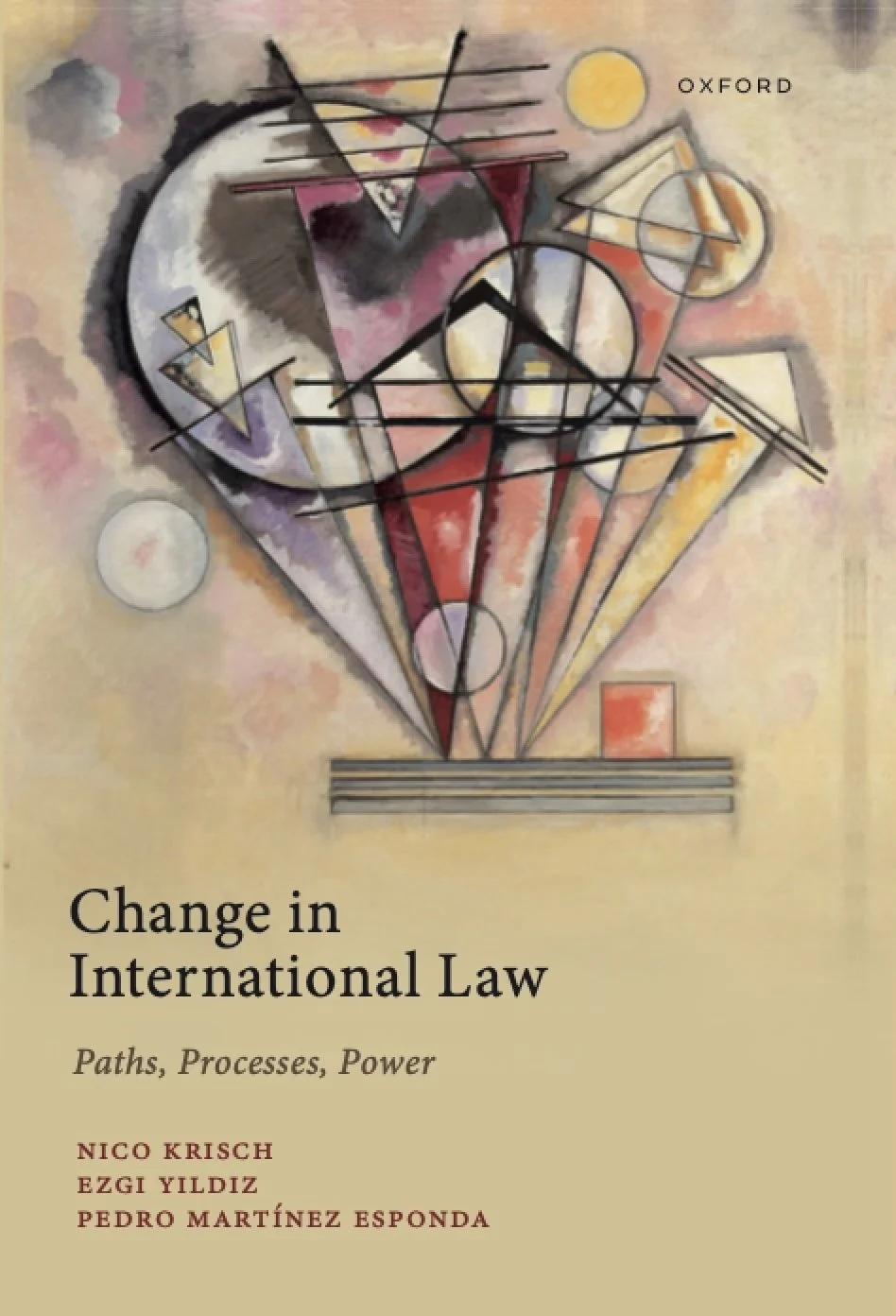
Change in International Law: Paths, Processes, Power
How does international law change? How does it adapt to new contexts and meet new challenges? The typical answer to these questions makes international law appear rather static, due to high hurdles for change and formal rules that require widespread agreement among states. In reality, however, change is far more common: new legal norms and understandings are generated constantly through the practices of legal actors. This book explores these actual, often gradual processes of international legal change. Combining qualitative analysis and statistical examination of data derived from twenty-five cases across eight subfields, the book offers the most systematic study to date of international legal change in practice beyond treaty-making. It approaches international law as a discursive process characterized by distinctive, socially constructed communities and authorities, and identifies five distinct paths through which legal change occurs. These paths shape who can act, how change is framed, and whether and under what conditions it gains traction, and they—and their relative weight—vary heavily across the different areas of international law. On these paths, change comes about in ways which defy common expectations of a state-centric international law: the analysis presented in the book shows that the success of change attempts depends less on broad state support or even the support of major powers, but to a greater extent on support from authorities and institutions in the respective fields. The result is an international law that may not be dynamic enough to cope with the speed of change in today’s accelerated world, but one that is significantly more dynamic than is usually assumed
It is open access, and you can read/download the book using the following link: https://academic.oup.com/book/62720
Endorsements
"With their outstanding book, Krisch, Yildiz, and Martinez advance a welcome novel approach to slow dynamics of change in international law. As an alternative to doctrinal approaches, the book's framework brings encompassing interdisciplinary research experience with globally leading scholars in the field to bear and, as such is apt to account for 'a dynamism of small steps, of gradual change'. Students from International Law and International Relations as well as practitioners will be grateful for this oevre's most welcome attention to detail to gradual institutional change along carefully selected paths. A true masterpiece!" -- Antje Wiener, Professor of Political Science and Global Governance, University of Hamburg
"Inter-disciplinarity is often preached, but rarely properly practiced. In this pathbreaking work, based on in-depth command of legal doctrine, Krisch, Yildiz and Martinez Esponda show how the political process of changing international law is embedded in legal rules while giving rise to new rules. A must-read for scholars of international law and international relations alike." -- Jan Klabbers, Whewell Professor of International Law, University of Cambridge
"You will not necessarily agree with all that you will read in this rich volume. But beyond doubt, you will not only learn a great deal from it but become wiser. In my book, this is the highest form of praise of scholarship." -- J.H.H. Weiler, Joseph Straus Professor of Law, New York University School of Law
"Change in International Law is an essential read in the current period of disruption and change in international law and politics. The book couples theoretical advances with empirical analyses that are drawn from 25 episodes of international norm change covering eight domains of international law. The findings challenge some widely held understandings in international legal studies. Change in International Law builds skillfully on insights from both legal and political analysis and will be an indispensable resource for students, scholars, and practitioners." -- Wayne Sandholtz, University of Southern California